
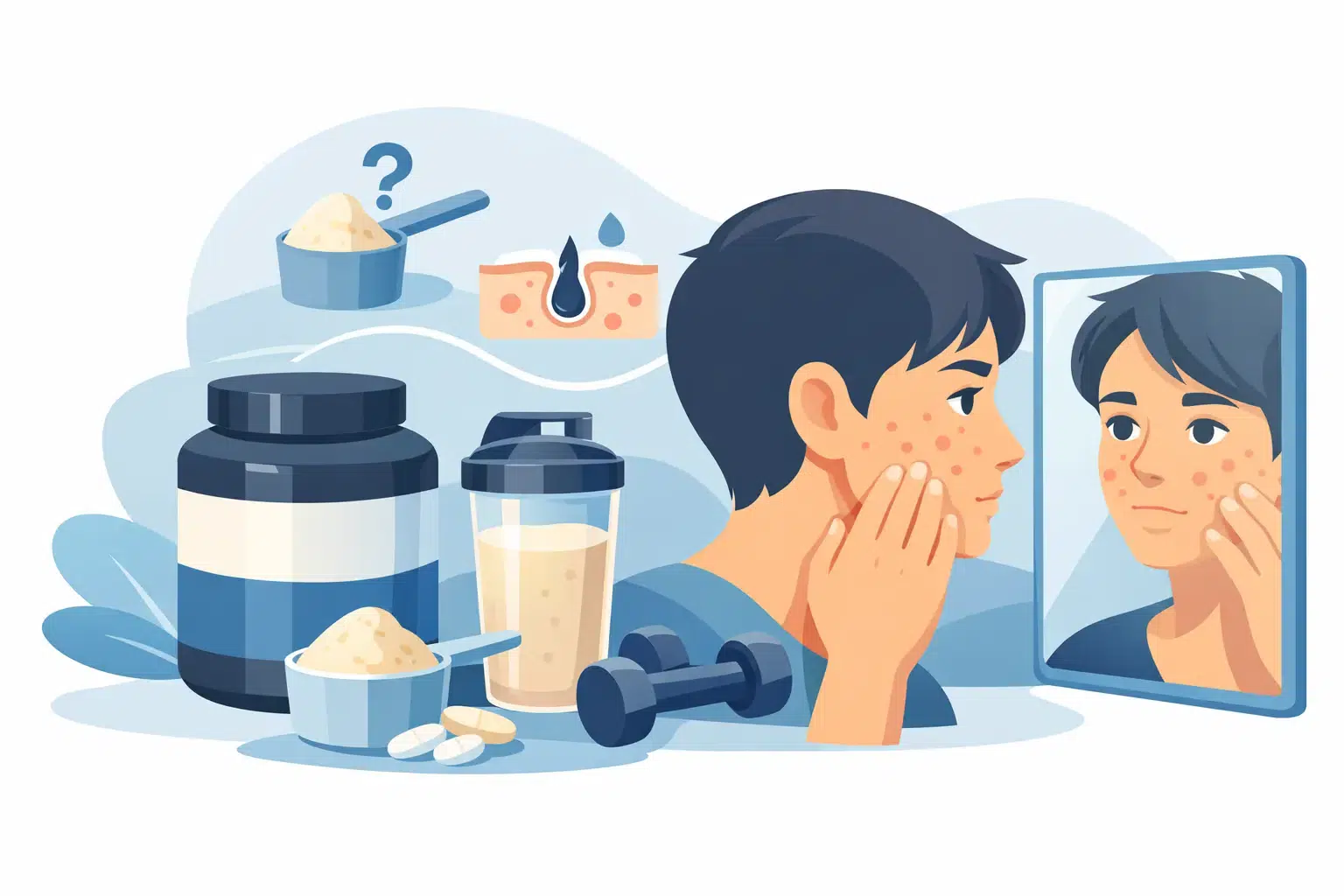
A new shake can be an easy win for hitting your protein target, especially when work, training, and meals compete for your time. But if breakouts appear after you start using one, it is fair to ask: can protein powder cause acne? For some people, it may contribute. For many others, it is not the real culprit. The useful answer is not to fear protein, but to identify the ingredient, habit, or dietary pattern your skin is reacting to.
Protein powder does not automatically cause acne. Acne develops through a mix of oil production, clogged pores, inflammation, skin bacteria, hormones, genetics, stress, and skincare habits. However, certain protein powders – particularly dairy-based whey products – may aggravate breakouts in people who are already prone to acne.
The strongest concern is not that protein itself is bad for your skin. Your muscles, recovery, appetite, and overall nutrition all benefit from adequate protein. Rather, the issue may be how a particular formula interacts with insulin-related signaling, dairy sensitivity, digestion, or your wider routine.
This is why two gym friends can take the same whey isolate: one sees no change at all, while the other notices more pimples along the jawline, cheeks, chest, or back within a few weeks. Your response matters more than a blanket rule.
Whey is a milk-derived protein, valued because it is convenient, complete, and rich in amino acids that support muscle protein synthesis. It can also stimulate insulin and insulin-like growth factor 1, often shortened to IGF-1. These signals are involved in normal growth and recovery, but in susceptible people they may also encourage oil-gland activity and skin-cell turnover. That combination can make pores more likely to clog.
Dairy itself may be relevant, too. Some people tolerate yogurt or cheese well but notice a pattern with whey shakes. Others react more broadly to dairy foods. This is not the same as a milk allergy, and it does not mean dairy is harmful for everyone. It simply means whey deserves a closer look when the timing lines up with persistent breakouts.
A mass gainer can create an even more obvious problem for some users. These formulas often contain large servings of carbohydrates and calories alongside protein. If your shake is effectively a high-sugar meal, frequent blood sugar swings may add another factor to consider. That does not make every mass gainer unsuitable, but it makes label reading more important.
Do not assume the word “whey” tells the whole story. A protein powder may also include sweeteners, flavor systems, gums, added vitamins, digestive enzymes, or carbohydrate blends. Any of these can affect how you feel, although direct evidence that common sweeteners cause acne is limited.
What may matter more is your individual tolerance. If a shake leaves you bloated, causes loose stools, or encourages you to reach for sugary snacks later, the formula may not be a good fit for your routine. Digestive discomfort does not prove it causes acne, but it is a practical reason to consider a simpler alternative.
Also look at what goes into the shaker. Blending protein with milk, ice cream, sugary cereal, or multiple spoonfuls of nut butter can turn a quick post-workout option into a calorie-dense shake. Calories are not the enemy, especially during a muscle-gain phase, but a complicated shake makes it harder to pinpoint what is affecting your skin.
It is easy to blame the newest supplement because it is the most noticeable change. Yet training phases often bring several acne triggers at once. Sweat sits on the skin after a workout, tight clothing rubs against the back and shoulders, towels or pillowcases are not changed often enough, and hands touch the face between sets.
Stress, poor sleep, increased calories, and hormonal products can also make a significant difference. In particular, anabolic steroids and some hormone-altering compounds can lead to pronounced acne. Protein powder should not be used as the explanation for breakouts that are severe, painful, sudden, or accompanied by other hormonal changes.
A practical approach is to look at the full timeline. Did breakouts begin after adding whey, increasing from one scoop to three, starting a bulking phase, changing skincare, or training in a hotter environment? Patterns are far more useful than assumptions.
If you suspect your shake is contributing, avoid changing everything overnight. That can leave you with clear skin but no idea why it improved. Instead, keep meals, skincare, and training as consistent as reasonably possible while you test one variable.
Start by recording your current product, serving size, frequency, and where breakouts appear. Take a simple photo once a week in similar lighting. Then stop the suspected powder for about three to four weeks, while still meeting your protein needs through food or another protein source. Skin changes are not instant, so a three-day test is rarely enough.
If your skin settles, you have useful information, though not absolute proof. You can stay with the alternative or, if you want a clearer answer, reintroduce the original powder for a short period. If breakouts return in a similar pattern, it is reasonable to choose a different formula going forward.
Do not deliberately restart a product if you had hives, swelling, wheezing, or other signs of an allergic reaction. Seek medical care promptly for those symptoms.
If whey seems to be the issue, you still have plenty of ways to support recovery and daily protein intake. The best choice depends on your goals, food preferences, digestion, and total diet.
Whey isolate is filtered to contain less lactose and usually less fat than whey concentrate. For someone whose concern is lactose-related digestive discomfort, it may be easier to tolerate. It is still dairy-derived, however, so it may not solve breakouts if the issue is related to whey or dairy signaling rather than lactose.
Pea, rice, soy, hemp, and blended plant proteins are dairy-free options. A pea and rice blend can provide a strong amino acid profile for active adults, while soy protein is a complete protein with substantial research behind it. Choose a product with enough protein per serving and a flavor you will realistically use consistently.
Egg white protein is another complete, dairy-free option. Beef protein powders may suit some shoppers, but check the label carefully because formulas and amino acid profiles vary. A product being labeled “beef” does not automatically make it superior for muscle growth or skin.
Whichever type you select, favor a reputable brand with a clear label, sensible serving size, and ingredients that fit your needs. A shorter ingredient list can make troubleshooting easier, but it is not automatically better than every flavored formula.
A protein change will not overcome an inconsistent skincare routine. Shower or cleanse after sweaty training when possible, use clean workout clothing, and avoid letting hats, helmets, straps, or phone screens repeatedly press against irritated skin. For body acne, breathable training fabrics and clean towels can make a real difference.
Keep your nutrition realistic. You do not need a perfect diet to build muscle or feel your best, but regular meals with fiber-rich carbohydrates, fruits, vegetables, healthy fats, and adequate hydration can support both performance and general wellness. Use protein powder as a convenient tool, not the foundation of every meal.
For mild acne, over-the-counter ingredients such as salicylic acid, benzoyl peroxide, or adapalene may help when used appropriately. These can be drying, so introduce them gradually and follow product directions. A dermatologist can offer more targeted care for persistent acne, scarring, deep cysts, or breakouts that affect your confidence.
Your protein routine should power your goals, not leave you guessing about your skin. Choose a formula you digest well, use it consistently enough to evaluate it, and let your own results guide the next scoop.