
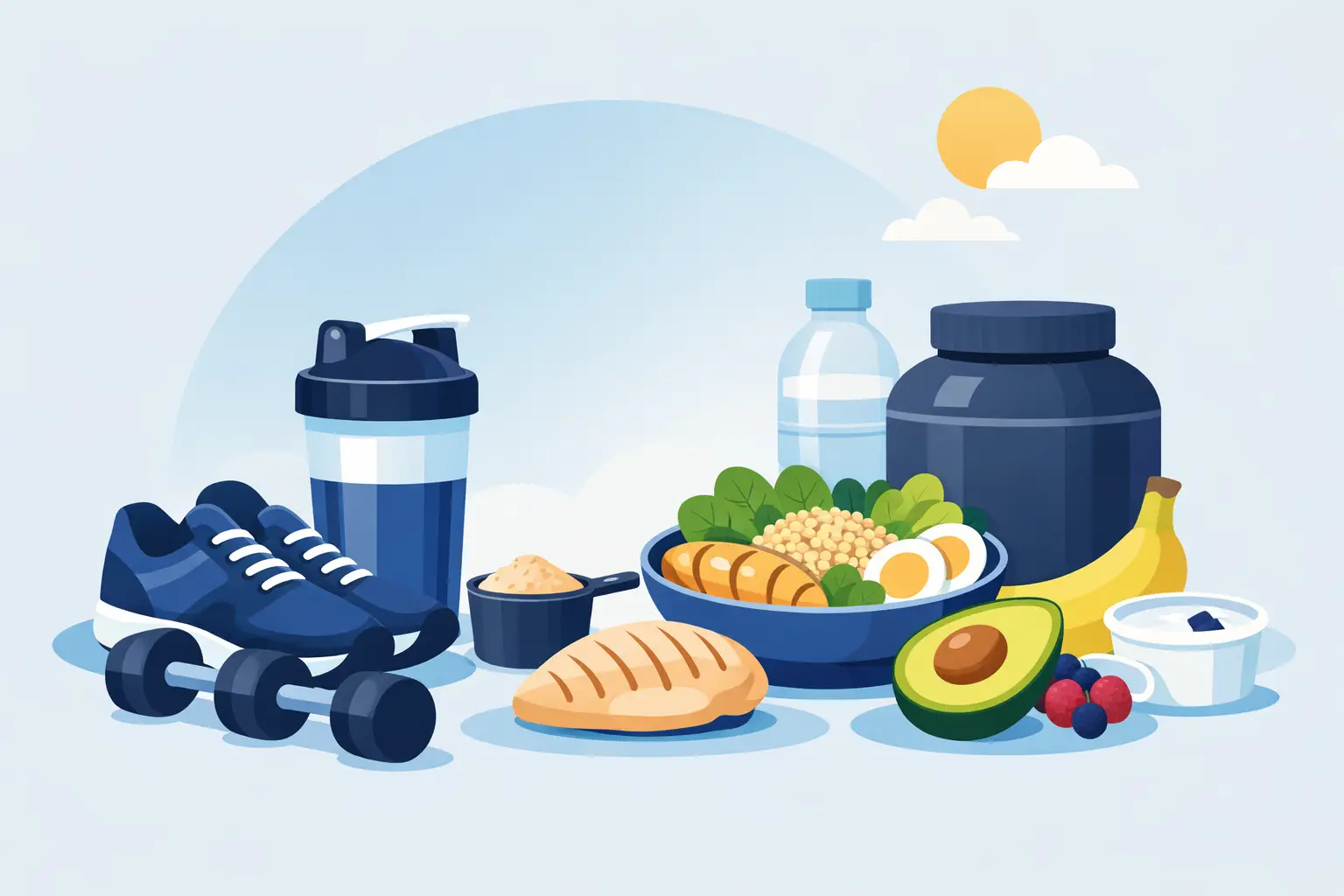
Your workout does not end when you rack the bar, step off the treadmill, or leave the studio. The choices you make over the next few hours influence how ready you feel for tomorrow’s session. This guide to post workout nutrition helps you make those choices without treating recovery like a complicated science experiment.
For most active people, the priority is simple: eat enough total food, get adequate protein, replace fluids, and use supplements only where they make daily nutrition more convenient. The details change based on whether your goal is muscle growth, fat loss, endurance, or simply having steady energy for a busy week.
Post-workout nutrition has three main jobs. Protein supplies amino acids for muscle repair and adaptation. Carbohydrates replenish some of the glycogen used during hard training. Fluids and electrolytes help replace what you lose through sweat.
None of these works in isolation. A high-protein shake is useful, but it cannot make up for consistently under-eating. A large carb meal can support demanding training, but it is less helpful if protein intake across the day is low. Think of your post-workout meal as one important part of a full-day recovery plan.
Resistance training creates a reason for your body to build and repair muscle tissue. Dietary protein provides the raw materials. A practical target after training is around 20 to 40 grams of high-quality protein, with the right amount depending on your body size, meal schedule, and total daily needs.
Whey protein is popular because it is convenient, naturally rich in essential amino acids, and easy to use when a full meal is not realistic. Whey isolate can be a good choice for people who want higher protein with less carbohydrate and fat, or who find regular whey concentrate harder to digest. Plant protein blends can also work well, especially when they combine sources to provide a more complete amino acid profile.
Whole foods count just as much. Greek yogurt, eggs, chicken, fish, lean meat, tofu, tempeh, and beans can all anchor a recovery meal. If you trained near a mealtime, a balanced plate may be more satisfying than a shake. If you are commuting, heading into meetings, or training late, a shaker bottle and protein powder may be the choice you can actually stick with.
Carbs are most valuable after long, high-volume, or intense sessions. Hard leg training, repeated sprint work, endurance sessions, and two-a-day training can substantially reduce muscle glycogen. Replenishing it supports performance in your next workout.
You do not need to fear carbs after a workout if they fit your goals. Rice, potatoes, oats, fruit, bread, cereal, noodles, and milk are all practical options. Pairing carbohydrates with protein is often an easy way to create a complete recovery meal, such as yogurt with fruit and granola, rice with chicken, or a protein shake alongside a banana.
The amount depends on what happens next. Someone finishing a 45-minute strength session before a rest day may need less carbohydrate than a runner training again that evening. If fat loss is your goal, keep the overall calorie deficit reasonable and prioritize protein, vegetables, fiber, and filling meals. Cutting carbs to zero after every workout can make training quality, sleep, and adherence harder for some people.
Sweat loss is highly individual, particularly in hot or humid conditions. Water is enough for many standard gym sessions, especially if you arrive well hydrated and eat regular meals. But if your clothes are soaked, you train outdoors, your session lasts more than an hour, or you notice headaches and heavy fatigue afterward, electrolyte support may be worthwhile.
Sodium is the electrolyte most commonly lost in sweat. An electrolyte drink or powder can be a useful, convenient option after demanding training. Check the label rather than assuming every hydration product is the same. Some are designed mainly for flavor, while others provide a more meaningful amount of sodium and other minerals.
A simple habit works well: drink steadily after training, then use thirst, urine color, and how you feel over the rest of the day as practical feedback. Extremely clear urine all day is not a goal, and neither is trying to replace sweat losses with only coffee or energy drinks.
You may have heard that you must drink a shake within 30 minutes or your workout is wasted. That claim is overstated. Your body remains responsive to protein for hours after resistance exercise, and total daily protein intake matters more than hitting a narrow deadline.
Still, timing can matter in real life. If you trained fasted, have not eaten protein for several hours, or need to train again soon, eating relatively soon after your session is sensible. Aim for a protein-rich meal or snack within about two hours when practical. If you had a balanced meal shortly before training, you have more flexibility.
The best timing strategy is the one that supports consistency. A person who reliably gets enough protein over three or four meals will generally make better progress than someone obsessing over a 30-minute window while missing meals later in the day.
Supplements should support a solid diet, not replace it. The most useful choices are often the least flashy because they solve specific problems: convenience, insufficient intake, hydration, or a well-established performance need.
Whey or plant protein powder is a practical tool for meeting protein targets. Creatine monohydrate is one of the best-researched options for strength, power, and lean mass support. A daily dose of 3 to 5 grams is commonly used, and the exact time you take it matters far less than taking it consistently. Mixing it into a post-workout shake is simply an easy habit.
Carbohydrate powders or mass gainers can help people with high calorie needs, intense training schedules, or difficulty gaining weight. They are not automatically necessary for muscle growth. If regular meals and snacks already meet your calorie needs, whole-food carbs may be enough.
EAAs and BCAAs are often marketed for recovery, but their value is limited when you already consume enough complete protein. They may be more relevant for people training fasted, eating very little protein, or struggling to eat around training. For most gym-goers, spending first on quality protein foods or a reliable protein powder is usually the more direct move.
Be careful with proprietary blends, megadoses, and products that promise dramatic transformations. Choose reputable brands with clear labels, sensible serving sizes, and ingredients that match your goal. If you have a health condition, are pregnant or nursing, or take medication, check with a qualified healthcare professional before adding supplements.
For an early gym session, try scrambled eggs with whole-grain toast, fruit, and milk, or a protein shake with oats and a banana if you need to get out the door. This gives you protein, carbs, and fluids without a complicated prep routine.
After a lunchtime workout, a rice bowl with chicken, salmon, tofu, or lean beef plus vegetables is a strong option. Adjust the rice portion based on your training volume and goals. Add fruit or yogurt if you need more energy and protein.
For late-night training, keep digestion in mind. Greek yogurt with berries and cereal, cottage cheese with fruit, or a shake with milk and a banana can support recovery without feeling overly heavy before bed. Those trying to gain size may need a larger dinner, while those managing calories may prefer a lighter protein-focused meal.
Good post-workout nutrition is not about copying a professional athlete’s supplement stack. It is about matching your intake to your workload, appetite, schedule, and objective. Start by making protein a daily priority, add carbs according to training demands, and take hydration seriously when sweat losses are high.
At Good Life Nutrition House, the most useful product is the one that fits your goal and makes your routine easier to maintain. A well-chosen protein powder, creatine, electrolyte formula, or convenient snack can remove friction, but your habits do the real work.
Finish your next workout with a simple question: what does my body need to train well again? Answer that consistently, and recovery becomes one of the strongest parts of your program.