
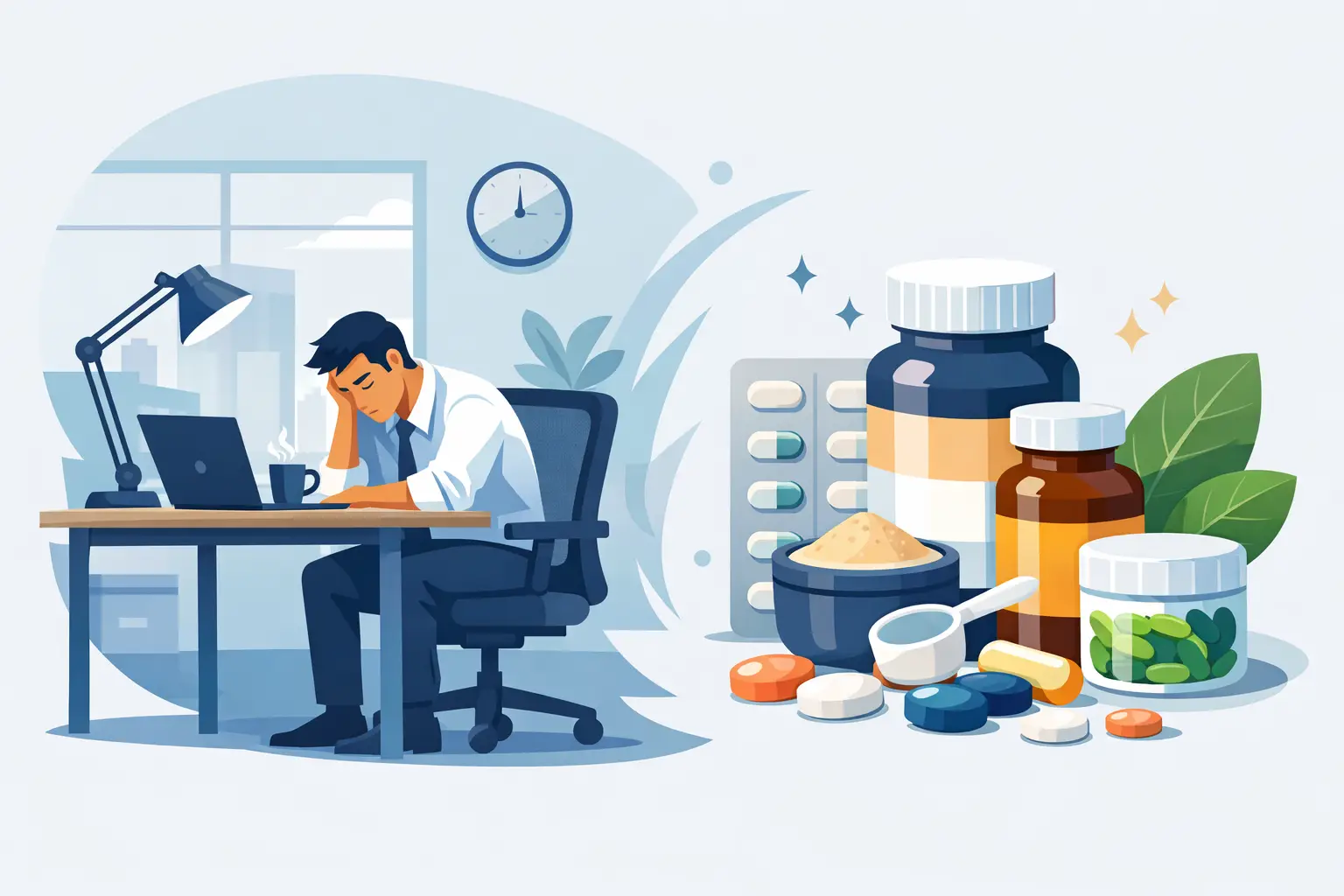
A 3 p.m. energy crash is rarely solved by another oversized coffee. For busy professionals, the top supplements for office fatigue can help support steadier energy, focus, stress resilience, and recovery, but only when they match the reason you feel drained in the first place. Poor sleep, rushed meals, long screen hours, low activity, dehydration, medication effects, and nutrient shortfalls can all look like “work fatigue.”
The practical goal is not to feel artificially stimulated from morning to night. It is to build a supplement routine that supports normal energy metabolism, mental performance, and sleep quality while your daily habits do the heavier lifting. Start with one targeted option, assess it for two to four weeks, and avoid stacking multiple high-stimulant products just to survive a demanding schedule.
Office fatigue often comes in three different forms. You may feel physically low-energy and heavy, mentally foggy and distractible, or wired but exhausted after a high-pressure day. Each pattern calls for a slightly different approach.
If your fatigue began suddenly, is severe, lasts for weeks, or comes with shortness of breath, chest pain, fainting, unexplained weight change, low mood, or major sleep disruption, speak with a healthcare professional rather than self-treating with supplements. Persistent tiredness can be related to anemia, thyroid conditions, sleep apnea, depression, infections, medication side effects, or other concerns that need proper assessment.
For everyday fatigue, consider the basics first: Are you eating enough protein and fiber-rich meals? Drinking water regularly? Getting daylight and movement before noon? Sleeping at consistent times? Supplements work best as support, not as permission to run on four hours of sleep.
Magnesium is a strong starting point for professionals whose workday fatigue is tied to poor sleep, muscle tension, frequent training, or a diet light on nuts, legumes, leafy greens, and whole grains. It contributes to normal muscle and nerve function and is involved in energy production throughout the body.
Magnesium glycinate is often favored in evening routines because it is generally well tolerated and pairs naturally with relaxation habits. Magnesium citrate can be useful for some people but may loosen stools, while magnesium oxide is less absorbable for many users. A common supplemental range is 200 to 350 mg of elemental magnesium daily, though individual needs vary.
Take magnesium later in the day if your main goal is winding down. People with kidney disease should get medical guidance first, and magnesium can interfere with the timing of some antibiotics and thyroid medications.
B vitamins help convert food into usable energy, but they are not instant energy drinks. Vitamin B12 is most useful when intake or absorption is low, which is more common among vegans, vegetarians, older adults, people taking metformin or acid-reducing medication, and those with certain digestive conditions.
If a blood test shows low B12, correcting that deficiency can make a meaningful difference in fatigue and concentration. If your diet is already varied and your B12 status is normal, more is not necessarily better. High-dose B complexes may cause nausea in some people, and taking excessive vitamin B6 long term can create nerve-related problems.
Choose a reputable B12 or B complex with transparent labeling and avoid treating it like a pre-workout. Morning is usually the most convenient time to take it with food.
Creatine is widely known for strength and muscle support, but it also has a place in an office-fatigue conversation. Creatine helps replenish cellular energy, particularly in tissues with high energy demand, including muscle and the brain. Some people find it especially useful when they combine demanding work with regular resistance training, limited sleep, or a low-meat diet.
Creatine monohydrate is the most studied form. A simple daily serving of 3 to 5 grams is enough for most adults, with no loading phase required. Consistency matters more than timing, so add it to a shake, water, or breakfast routine you will actually follow.
You may see a small increase in scale weight from water stored inside muscle cells. That is expected and is not the same as body fat gain. If you have kidney disease, are pregnant, or have been advised to limit protein or certain supplements, check with your clinician before using creatine.
Omega-3 fatty acids are not a quick fix for an afternoon slump. Their value is more foundational: they support heart health, brain function, and a balanced inflammatory response. For office workers who rarely eat fatty fish, a quality fish oil or algae-based omega-3 supplement can be a sensible part of a broader wellness plan.
Look at the actual EPA and DHA amount on the label, not only the total fish oil amount. Taking omega-3s with a meal that contains fat can improve comfort and absorption. People who use blood-thinning medication or have surgery planned should ask a healthcare professional about appropriate use.
Many office routines begin before daylight and end after it. Vitamin D is worth considering if you spend little time outdoors, use strong sun protection consistently, have darker skin, or have had a low result on a blood test. Low vitamin D can overlap with symptoms such as low energy, low mood, and muscle weakness, though those symptoms are not specific to vitamin D alone.
A blood test is the clearest way to personalize your dose. For general use, many adults choose a moderate daily vitamin D3 supplement, often taken with food. Very high doses should not be used casually because vitamin D is fat-soluble and can accumulate.
For people who tolerate caffeine well, pairing a moderate amount of caffeine with L-theanine can offer a more controlled alternative to repeatedly refilling coffee. L-theanine is an amino acid commonly associated with tea that may promote a calmer sense of focus without acting as a sedative.
The trade-off is clear: caffeine can improve alertness, but it can also worsen anxiety, reflux, heart palpitations, and sleep. Keep it earlier in the day, especially if you are sensitive. A useful rule is to avoid caffeine within at least eight hours of bedtime, then adjust based on your own sleep response.
Do not combine several caffeinated products without checking the labels. Coffee, energy drinks, fat burners, pre-workouts, and focus formulas can add up quickly.
Rhodiola rosea is an herbal option often used for mental fatigue during periods of stress. It may suit professionals who feel depleted by demanding deadlines rather than simply sleepy from a short night. Results vary, and it is not the first choice for everyone.
Choose a standardized product from a reputable source and begin with the lowest suggested serving. Rhodiola may feel too stimulating for some people and may not be appropriate alongside certain antidepressants, bipolar disorder treatment, or other medications. When in doubt, ask a pharmacist or clinician before adding herbal formulas.
The best supplement plan for office fatigue is usually simple. For example, someone sleeping poorly and training after work may prioritize magnesium in the evening, creatine daily, and a protein-rich breakfast. A vegan professional with confirmed low B12 may focus on B12, vitamin D if needed, and algae-based omega-3s. Someone whose fatigue is mostly deadline-related might benefit more from hydration, a balanced lunch, a short walk, and carefully timed caffeine with L-theanine than from a large supplement stack.
Quality matters. Select products with clearly stated active ingredients, sensible serving sizes, batch and safety standards, and reputable manufacturing. Good Life Nutrition House curates recognized wellness and sports nutrition brands so customers can select support by goal, whether that is daily energy, training recovery, sleep, or focused performance.
Keep a quick note for two weeks: your sleep duration, caffeine timing, meals, movement, and energy level around midmorning and midafternoon. This makes it easier to tell whether a supplement is helping or whether the real issue is a late bedtime, skipped lunch, or too much caffeine.
A well-chosen supplement can support a better workday, but the most reliable energy strategy is still wonderfully unglamorous: eat enough, move regularly, protect your sleep, and give your body a product with a clear purpose rather than a promise that sounds too good to be true.