
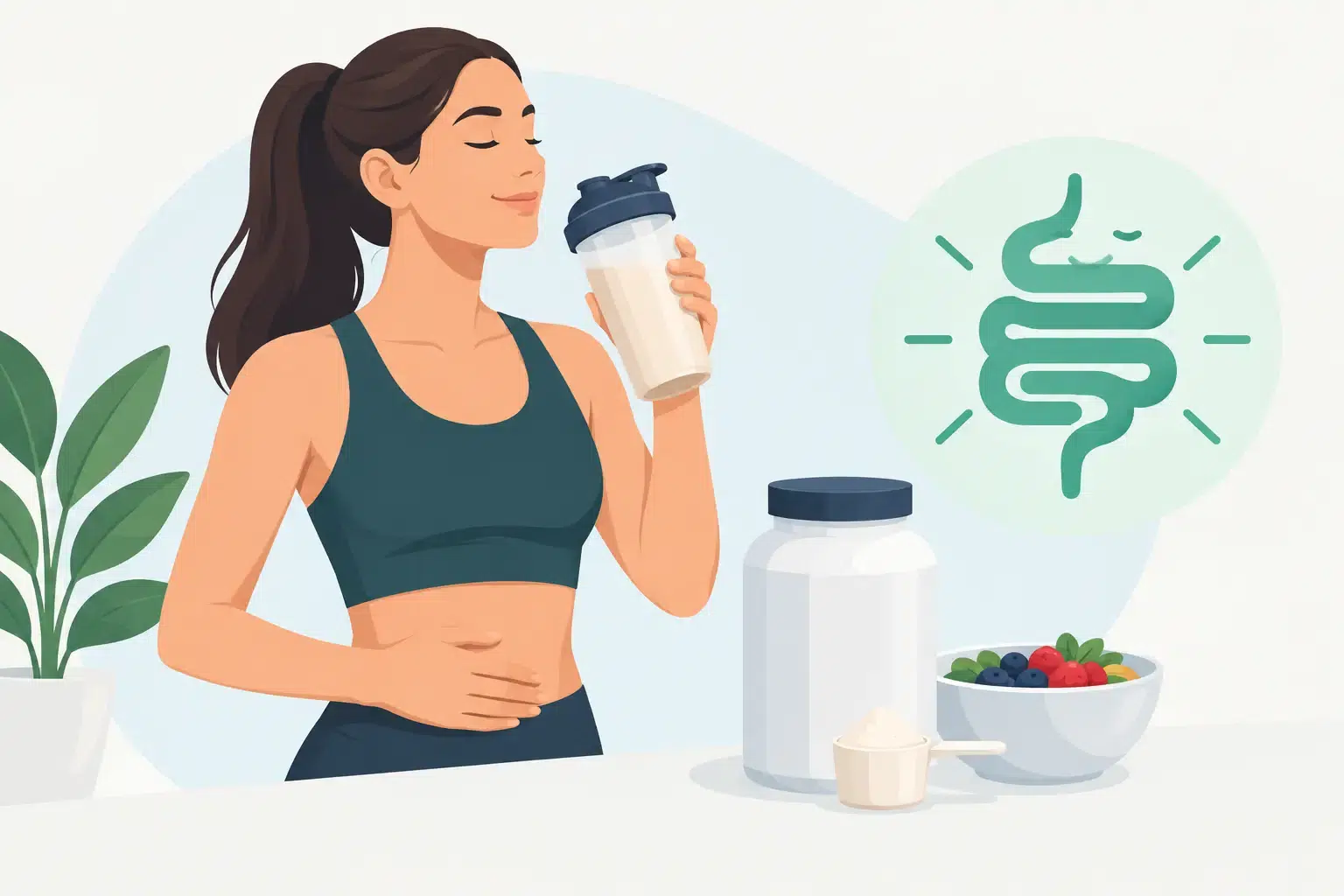
A protein shake is meant to make hitting your nutrition target easier, not leave you feeling overly full, gassy, or uncomfortable before work or after training. Learning how to prevent protein bloating usually comes down to identifying one of three issues: the protein source, the rest of the formula, or the way you are using it. The good news is that you do not have to give up convenient protein to feel better.
Protein itself is not automatically the problem. In fact, most active adults tolerate a well-chosen protein powder very well. Bloating is more often a sign that a particular ingredient, portion size, or drinking habit does not agree with your digestion.
Whey concentrate is a common example. It contains more lactose and fat than whey isolate, so people with lactose sensitivity may experience gas, stomach pressure, or loose stools after using it. This does not necessarily mean all dairy-based protein is off the table. Many people do much better with a high-quality whey isolate, which is typically filtered to remove much of the lactose.
The extra ingredients in a shake matter, too. Sugar alcohols such as erythritol, sorbitol, maltitol, and xylitol can cause digestive symptoms for some people, especially in larger amounts. So can certain fibers, gums, thickeners, and large doses of added probiotics. These ingredients are not inherently bad, but a formula designed for a thick, dessert-like texture may not be the best fit for a sensitive stomach.
Then there is the serving itself. A 40- or 50-gram shake blended with milk, oats, nut butter, fruit, and ice can be useful for someone trying to gain weight. It is also a substantial meal. Drinking it quickly after a hard training session can leave even a healthy digestive system struggling to catch up.
The most effective first step is to simplify your protein choice. If you currently use a flavored blend with a long ingredient list, try a straightforward powder for one to two weeks and notice how you feel. This gives you a clearer answer than changing five things at once.
If dairy seems to trigger symptoms, whey isolate is often a practical place to start. It delivers complete protein with relatively low lactose, making it a popular post-workout option for lifters and busy professionals who want fast, convenient nutrition. Hydrolyzed whey may be another option for those who prefer a more extensively broken-down protein, although it can cost more and its taste may be less appealing.
If whey isolate still does not sit well, consider a non-dairy option. Pea protein, rice protein, soy protein, egg white protein, and blended plant proteins can all help support daily protein intake. The best choice depends on your dietary preferences, tolerance, and overall goal. For muscle growth, look for a complete amino acid profile or a thoughtfully formulated plant blend rather than choosing based on flavor alone.
Do not assume that plant protein is always gentler, however. Some plant-based formulas are high in added fibers or gums, which can create their own bloating issues. Read the full label, not just the front of the tub.
When comparing powders, pay attention to more than protein grams and calories. A shorter ingredient list can be helpful when you are troubleshooting digestive discomfort. In particular, consider whether your shake contains:
None of these ingredients needs to be avoided by everyone. The aim is to find your personal tolerance. For example, creatine is well researched for strength and performance, but if a combined protein formula also gives you stomach discomfort, taking creatine separately with a meal may make it easier to identify the cause.
More protein in one shake is not always better. Your body can digest a larger serving, but the experience may be less comfortable if you are not used to it. Start with half to three-quarters of a scoop if you are new to protein powder, returning to a full serving once you know it agrees with you.
For many people, 20 to 30 grams of protein per shake is a comfortable, useful range. Your ideal daily intake depends on body weight, training volume, total food intake, and goals. Someone using protein powder to close a small gap in a balanced diet needs a different approach from an athlete using shakes to support high-volume training.
Spacing your protein across meals can also help. Rather than relying on two very large shakes, include protein at breakfast, lunch, dinner, and one convenient snack or shake. This can support muscle recovery while making the total amount easier on your stomach.
A simple change in preparation can reduce the amount of air and volume you swallow. Shaking a drink vigorously or blending it for a long time creates foam. That foam contains air, and drinking it quickly can contribute to a bloated feeling. Let the shake sit for a minute after mixing, then sip it instead of finishing it in a few large gulps.
Try mixing your powder with water first. Milk adds extra calories and nutrients, but it also adds lactose if you use regular dairy milk. If water works well but milk does not, lactose may be part of the issue. Lactose-free milk or an unsweetened plant milk may be better alternatives, depending on your preferences.
Also be realistic about what goes into your blender. Banana, oats, Greek yogurt, nut butter, and protein powder can make a highly satisfying smoothie, but it is closer to a full meal than a light recovery drink. If you are prone to bloating, use fewer ingredients immediately after training and save the larger smoothie for a time when you can eat and digest more slowly.
A hard workout can temporarily affect appetite and digestion, especially if you train in the heat, use high-stimulant pre-workout products, or jump straight from intense exercise into a heavy shake. You do not need to force down a thick shake the moment you rack your last set.
Have some water, cool down, and give yourself 20 to 60 minutes if that feels better. The total protein you consume across the day matters far more than finishing a shake within a narrow post-workout window. A lighter shake with water after training and a balanced meal later may be the more comfortable strategy.
Hydration deserves attention as well. Constipation can contribute to bloating, and it is more likely when training hard, sweating heavily, and under-drinking. Build regular fluids into your day, particularly in Hong Kong’s warm, humid conditions or any environment where workouts leave you drenched.
If you have not been eating much protein or fiber, suddenly adding daily shakes can be a noticeable change for your gut. Introduce the product gradually. Use a smaller serving for several days, then increase only if you feel comfortable.
Keep the rest of your routine consistent while you test it. Switching protein powders, adding a new pre-workout, changing your diet, and starting a high-fiber meal plan in the same week makes it nearly impossible to know what is driving symptoms. A simple note in your phone about the product, serving size, mixer, timing, and symptoms can reveal patterns quickly.
Occasional mild bloating is common, particularly after a large meal or an unfamiliar product. But persistent discomfort should not be treated as something you simply have to tolerate for the sake of your protein goal. Speak with a qualified healthcare professional if symptoms are frequent, severe, or accompanied by pain, vomiting, diarrhea, constipation that does not resolve, blood in stool, unexplained weight loss, hives, swelling, or breathing difficulty.
People with diagnosed lactose intolerance, irritable bowel syndrome, food allergies, or digestive conditions may need more individualized guidance. A supplement can support a well-planned diet, but it should not override signals that your body needs attention.
At Good Life Nutrition House, choosing from reputable protein categories and checking the ingredient panel before you buy can make that process much easier. Start with the simplest formula that fits your goal, give your body time to respond, and adjust one variable at a time. The right protein should help power your training and recovery while letting you feel your best long after the shake is gone.