
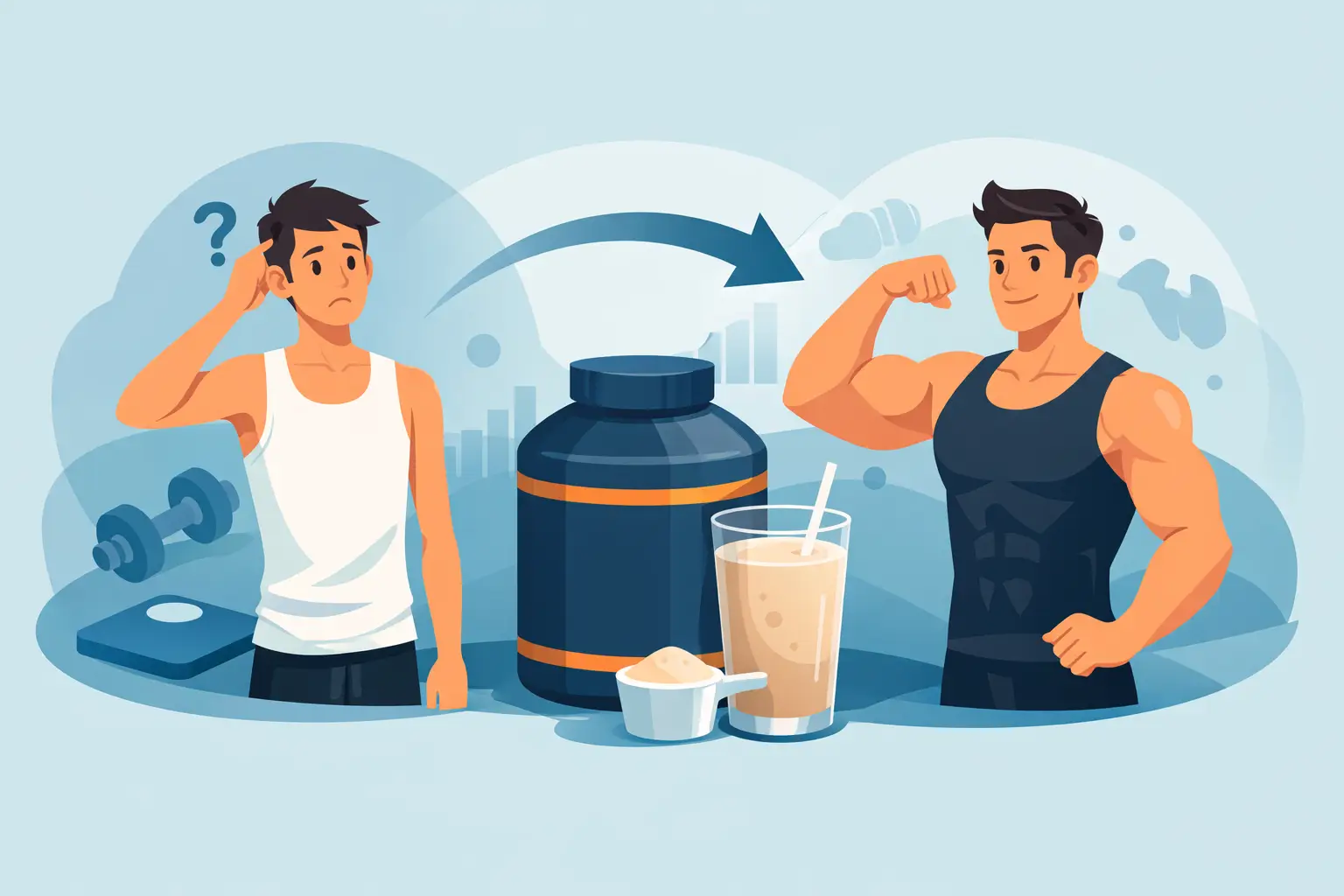
If you have been eating more, training consistently, and still watching the scale barely move, the issue is often not effort. It is total calorie intake. A mass gainer for skinny beginners can be a practical way to close that gap, especially when large meals leave you uncomfortably full or simply do not fit into a busy day.
That does not make a mass gainer a shortcut to quality muscle. It is a concentrated source of calories, carbohydrates, protein, and sometimes fats. Used well, it supports the calorie surplus required for weight gain. Used carelessly, it can add more body fat than you intended, upset your digestion, or replace the real meals your body still needs.
Many naturally lean beginners assume they have a “fast metabolism.” Sometimes that is partly true, but the more common explanation is simpler: their intake is inconsistent. A physically active person may eat what feels like a lot, then burn through those calories with training, walking, work, sports, and everyday movement.
Muscle growth also demands more than protein. You need enough overall energy to train hard, recover, and build tissue. If your body uses every calorie you eat just to meet daily needs, there is little left to support gradual weight gain.
Whole foods should remain the foundation. Rice, oats, potatoes, pasta, eggs, dairy, lean meats, fish, tofu, beans, nuts, olive oil, fruit, and vegetables provide vitamins, minerals, fiber, and satisfying meals. But drinking several hundred calories is often easier than forcing down another large plate of food. That is where a gainer earns its place.
Most mass gainers combine protein with a larger amount of carbohydrates. A serving may provide anywhere from 400 to well over 1,000 calories, depending on the formula and serving size. Some also include creatine, digestive enzymes, healthy fats, vitamins, or minerals.
Protein supplies amino acids to support muscle repair and growth. Carbohydrates replenish training fuel and make it easier to raise daily calories. The goal is not to drink the biggest shake possible. The goal is to create a manageable, repeatable calorie surplus while maintaining productive resistance training.
For a beginner, that generally means gaining slowly. A reasonable target is around 0.25% to 0.5% of body weight per week. For a 140-pound person, that is roughly 0.35 to 0.7 pounds weekly. Faster gain can happen, particularly in the first weeks of training, but a rapidly rising scale usually means you should review portion sizes before simply adding more powder.
Whey protein and mass gainers solve different problems. A standard protein powder is useful when you struggle to reach your protein target. It is typically lower in calories and easier to fit into a calorie-controlled plan.
A mass gainer is better suited to someone who needs both protein and substantial calories. If you already eat enough calories but fall short on protein, a regular protein shake is usually the more precise and cost-effective option. If you cannot consistently eat enough food to gain weight, a gainer can make the plan much easier to follow.
The front of the tub can be misleading. “High calorie” is not automatically a sign of a better product. Read the nutrition facts and ingredient list with your own goal in mind.
Start with calories per serving, then check whether the serving is realistic. Some labels list a very large serving made with multiple scoops. You do not have to start there. In fact, starting with half a serving is often smarter for appetite, digestion, and controlling your rate of gain.
Next, review the protein source and amount. A useful gainer should provide a meaningful protein contribution, often around 20 to 50 grams per serving depending on the formula and your chosen serving size. Milk-based proteins such as whey concentrate, whey isolate, and casein are common options. Plant-based gainers can work well too, but check that the protein blend and total protein amount fit your needs.
Carbohydrate quality matters, but context matters too. Maltodextrin and similar fast-digesting carbohydrates are common because they mix easily and raise calories efficiently. They can be useful after training or for people with very high calorie needs. If you prefer a steadier, more food-based formula, look for ingredients such as oat flour, sweet potato, brown rice, or other complex carbohydrate sources.
Also consider sugar, fat, fiber, and added ingredients. A high-sugar formula may be easy to drink but can feel overly sweet or cause an energy crash for some users. Too much fiber in a large shake can cause bloating. Added creatine can be convenient if you already plan to use it, but it is not essential to the effectiveness of the gainer itself.
Choose reputable brands with clear labeling and quality standards. At Good Life Nutrition House, three decades of supplement-industry experience informs a curated approach to products that support real training goals, not just impressive-looking labels.
Treat your gainer as food, not as a replacement for food. Begin with a half serving once daily, ideally at a time when it helps rather than ruins your appetite for meals. Midmorning, between lunch and dinner, or after a workout are often practical choices.
Post-workout is convenient, but it is not mandatory. Your total nutrition across the day matters far more than hitting a narrow post-training window. If a shake after lifting makes it easier to reach your calorie and protein targets, use it then. If you are too full after training, drink it later.
Mixing choices also change the calorie count. Water keeps the shake lighter and easier to digest. Milk or a fortified plant milk adds calories and protein. You can blend in a banana, oats, peanut butter, yogurt, or berries when you need more calories from familiar foods. Just remember that these additions can turn a moderate shake into a very large one quickly.
Track your body weight under similar conditions two or three times per week, such as first thing in the morning. Look at the average trend over two to three weeks, not a single day. If your average weight is not increasing, add a little more food or increase the gainer portion. If it climbs too quickly and your waist is increasing faster than you like, reduce the serving.
A calorie surplus provides raw material. Resistance training gives your body a reason to direct more of that gain toward muscle. Beginners do not need complicated programs, but they do need progressive training.
Build your routine around movements such as squats or leg presses, presses, rows, pulldowns, hip hinges, and lunges. Train with good technique, keep a record of your lifts, and gradually add reps, weight, or sets as your ability improves. Two to four focused strength sessions per week can produce excellent results when paired with enough food, protein, and sleep.
Aim for roughly 0.7 to 1 gram of protein per pound of body weight daily, spread across meals and snacks in whatever pattern you can sustain. Sleep is equally practical: hard training and extra calories cannot fully compensate for consistently poor recovery.
The first mistake is relying on a gainer while skipping meals. A shake can supplement your eating plan, but it cannot provide the variety, fiber, and micronutrients of a balanced diet. The second is taking a full serving immediately, then giving up because of bloating or stomach discomfort. Scale the serving to your tolerance.
Another common error is changing everything at once. Adding a huge shake, a new pre-workout, creatine, and an intense training plan makes it hard to tell what is helping or causing problems. Establish a simple baseline, then adjust one variable at a time.
Finally, do not confuse weight gain with muscle gain. Some fat gain is normal in a surplus, especially for beginners. The aim is steady progress, stronger workouts, better recovery, and a trend you can maintain rather than a dramatic change over a few weeks.
A mass gainer can be a useful tool when eating enough is the barrier, not a substitute for disciplined training or everyday nutrition. Start with the smallest effective serving, train with purpose, and let consistent weeks – not oversized shakes – power you toward the stronger, healthier body you want.