
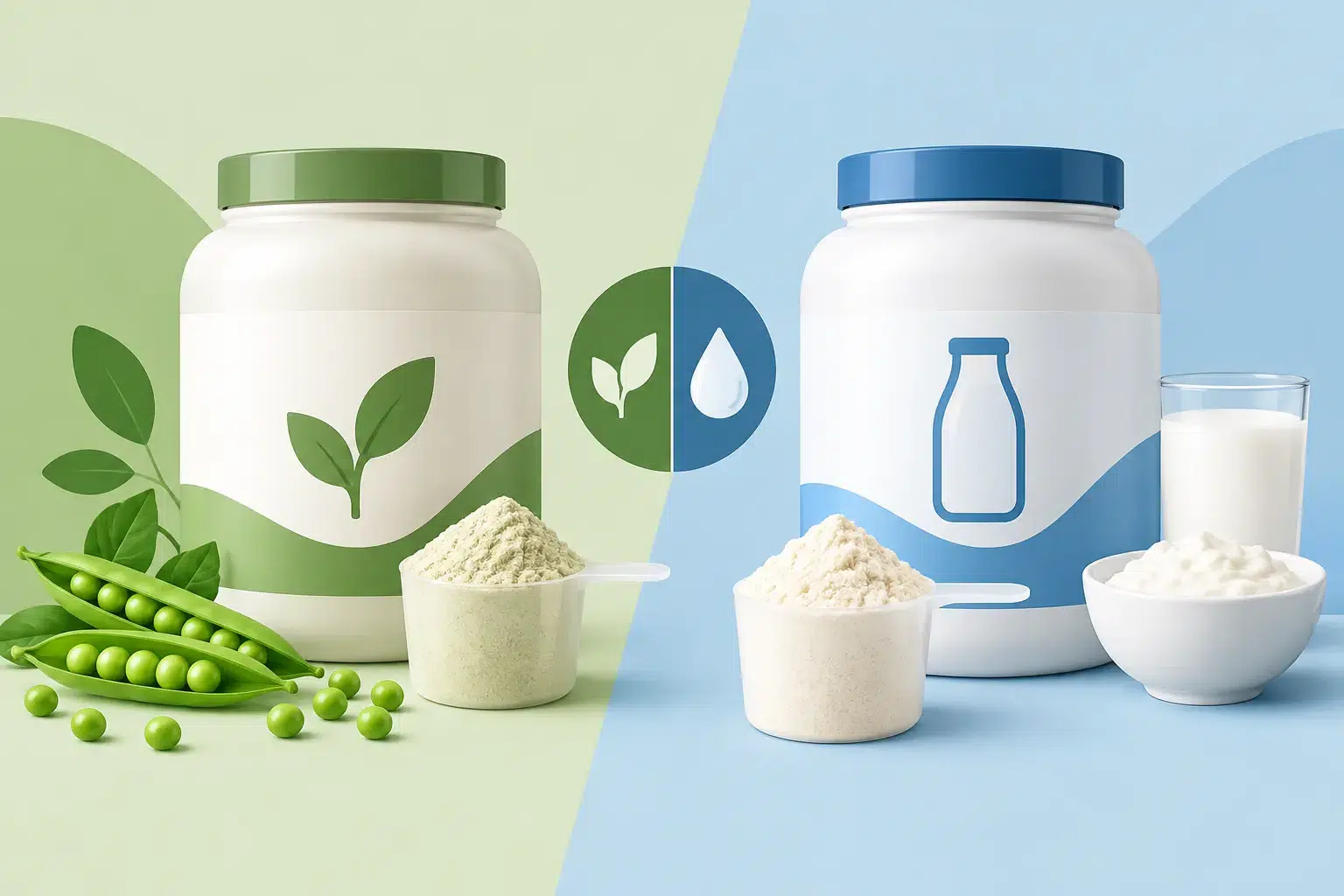
A protein shake can be the easiest part of a demanding training plan – until you are standing in front of two tubs wondering which one actually suits your body and goals. In the pea protein vs whey isolate decision, there is no universal winner. Whey isolate is often the more efficient choice for muscle-building support, while pea protein can be an excellent plant-based option for people who avoid dairy or prefer a vegan routine.
The best choice comes down to more than the protein number on the label. Your diet, digestion, training volume, budget, taste preferences, and consistency all matter. The powder you can use comfortably after training and keep in your routine is usually the one that will serve you best.
Both pea protein and whey isolate can help you meet daily protein needs, recover from workouts, and support lean muscle when paired with resistance training and enough calories. The key difference is their amino acid profile and how efficiently they stimulate muscle protein synthesis.
Whey isolate is made from milk and filtered to remove much of the fat and lactose. It is a complete protein, meaning it provides all nine essential amino acids your body must get from food. It is especially rich in leucine, an amino acid that helps signal the body to begin building and repairing muscle tissue after training.
That leucine content gives whey isolate a practical edge for lifters focused on maximizing muscle gain, particularly when a shake is replacing a meal or serving as a fast post-workout option. A typical serving delivers roughly 25 to 30 grams of protein with relatively few carbohydrates and fats, though the exact amount varies by product.
Pea protein is typically extracted from yellow split peas. It is naturally vegan, dairy-free, and generally well suited to people avoiding common milk-based protein powders. Pea protein contains all essential amino acids, but it is lower in methionine than whey and many other complete protein sources. Its leucine content is also usually lower per scoop.
This does not make pea protein ineffective. Research and real-world results show that pea protein can support strength and muscle gains when total daily protein intake is sufficient. It may simply require a slightly larger serving, or a well-formulated plant protein blend, to provide an amino acid profile closer to whey. For a serious trainee, consistency across the whole day matters more than chasing one perfect post-workout scoop.
Whey isolate is a strong fit if your priority is efficient muscle recovery, you tolerate dairy well, and you want a high-protein serving with minimal extras. Its fast digestion and naturally high essential amino acid content make it especially convenient after lifting, during a busy workday, or when you need to raise protein intake without adding many calories.
It is also useful during a calorie-controlled fat-loss phase. Because isolates are often leaner than standard whey concentrates, they can help you maintain protein intake while keeping fats and carbohydrates lower. That said, a lean physique still depends on total calorie intake, training, sleep, and adherence – no protein powder can do that work alone.
Pea protein can be the better choice for vegans, people with a dairy allergy, and anyone who finds milk-derived shakes uncomfortable. It also works well for wellness-focused shoppers who want a straightforward plant-based protein to add to smoothies, oats, baking, or a quick breakfast.
For the best performance-focused result, look at the serving size rather than assuming every scoop is equal. A pea protein product providing around 25 to 30 grams of protein can be a practical target after training. Some athletes also use a pea-and-rice protein blend, since rice protein can help complement pea protein’s lower methionine content.
Digestion is often the deciding factor people overlook. Whey isolate contains far less lactose than whey concentrate because of its additional filtration. Many people with mild lactose sensitivity tolerate an isolate well, particularly when it is mixed with water. Still, low lactose does not mean lactose-free in every case, and it does not make whey suitable for someone with a true milk allergy.
Pea protein is naturally free from dairy and lactose. For some people, that makes it easier to use daily. Others experience gas or bloating from pea-based powders, especially when they increase intake quickly or use formulas containing gums, sugar alcohols, inulin, or large amounts of added fiber. If your stomach is sensitive, choose a simpler formula and start with a half serving for several days.
Flavor and texture are part of digestion in a broader sense: if you dislike a shake, you are less likely to drink it. Whey isolate often mixes more smoothly and has a lighter mouthfeel. Pea protein can be thicker and earthier, especially in unflavored versions, but it tends to work very well in blended smoothies with banana, berries, nut butter, or oats.
Choose whey isolate if you eat dairy, want the most convenient amino acid profile for resistance training, and prefer a smooth, light shake. It is a particularly practical option for bodybuilders, strength athletes, and busy professionals trying to hit a higher daily protein target without relying on another full meal.
Choose pea protein if you follow a vegan diet, avoid dairy, or want a plant-based powder that fits a broader wellness routine. It can support muscle, recovery, and healthy daily nutrition just as effectively when your overall diet is thoughtfully planned and your protein intake is high enough.
If you are unsure, begin with the constraint that matters most. A vegan shopper does not need to force whey into the plan. A lifter who gets bloated from dairy does not need to tolerate discomfort for a marginal advantage. Conversely, someone who digests whey isolate easily and wants to prioritize muscle gain does not need to switch to plant protein simply because it is popular.
A quality protein powder should make its protein content, serving size, ingredients, and allergen information easy to understand. Pay attention to how much protein you receive per serving, how much added sugar is included, and whether the formula uses ingredients you know you tolerate.
Also consider how the product fits your routine. A clean unflavored powder may be ideal for cooking, while a flavored isolate can make an afternoon protein shake feel more convenient than a snack run. At Good Life Nutrition House, choosing from reputable brands and transparent formulas helps take some of the guesswork out of building a dependable routine.
A post-workout shake is useful, but it is not magic. Your body benefits most from meeting a suitable total protein intake across the day, spread across meals in amounts that are realistic for you. For active adults, a common evidence-based range is roughly 0.7 to 1 gram of protein per pound of body weight daily, with individual needs varying by training goal, calorie intake, and experience level.
Use whey isolate or pea protein as a convenient tool, not a substitute for a varied diet. Whole foods still provide vitamins, minerals, healthy fats, fiber, and the satisfaction that a shake cannot always replace. Pair your powder with structured meals, progressive training, hydration, and enough sleep, and it can help power you from start to finish.
The right pick is the one that supports your goals without creating friction. Whether that is a fast-mixing whey isolate after heavy training or a dairy-free pea protein in your morning smoothie, choose a formula you enjoy, tolerate well, and can use consistently enough to feel your best.