
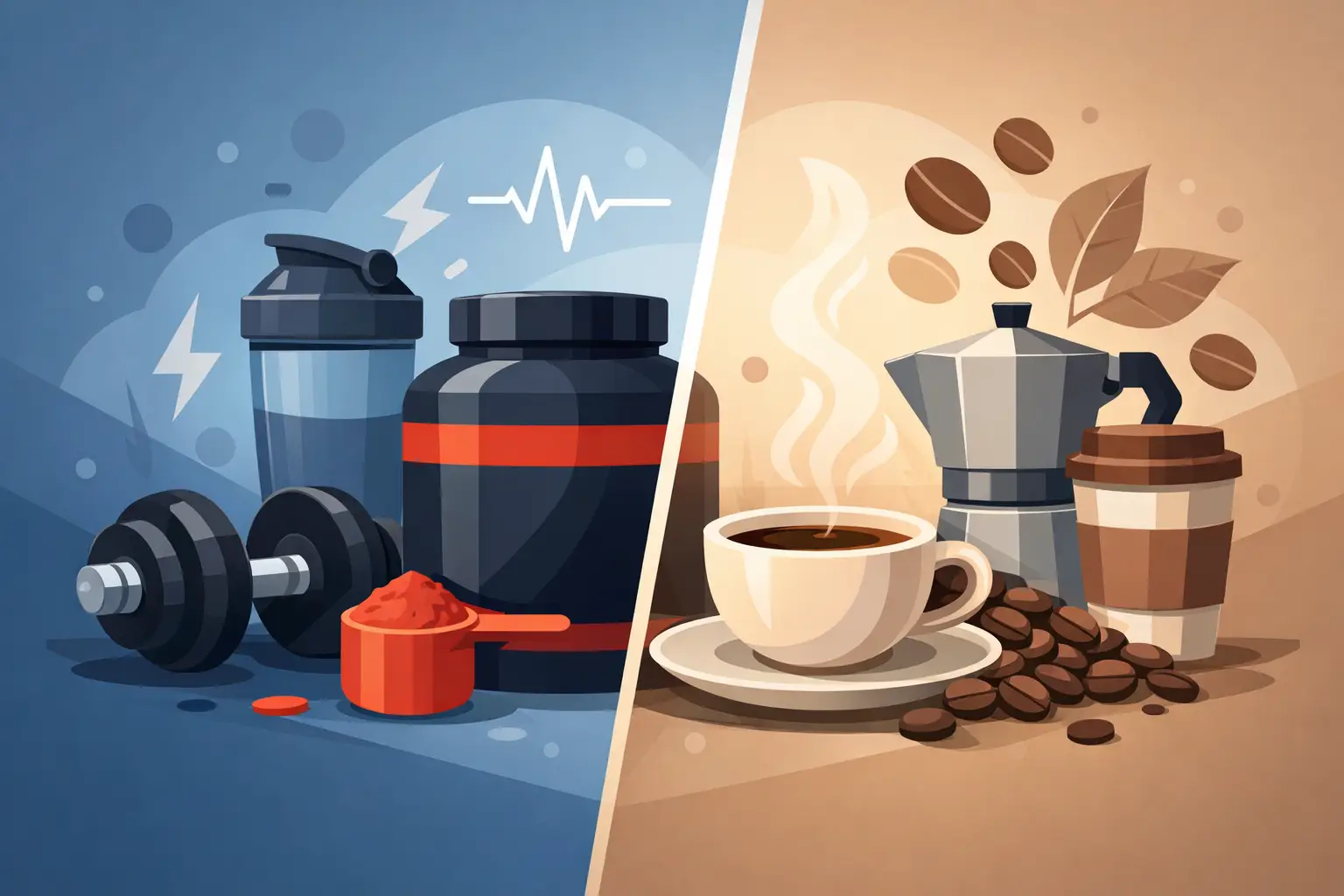
A strong cup of coffee before a 6 a.m. workout can feel like exactly what you need. But when your session calls for heavy sets, sprint intervals, or focused training after a long workday, the pre workout vs coffee caffeine decision is about more than getting awake. The better choice depends on your caffeine tolerance, the workout ahead, your schedule, and whether you need a simple lift or a more complete performance formula.
Coffee is primarily a caffeine source, although it also contains naturally occurring compounds such as polyphenols. Pre-workout supplements usually use caffeine as their foundation, then add ingredients intended to support training performance. Depending on the formula, these can include citrulline, beta-alanine, creatine, tyrosine, electrolytes, taurine, or theanine.
That distinction matters. Coffee may be all you need for an easy run, a lunchtime gym session, or a day when you want a familiar energy boost without extra ingredients. A well-formulated pre-workout may be more useful when you want stronger focus, better training drive, improved pumps, or support for high-volume lifting.
Neither is automatically better. The right option is the one that gives you useful energy without disrupting sleep, digestion, hydration, or recovery.
Caffeine can improve alertness, reduce the feeling of effort, and help many people train with greater intent. Yet dose makes a major difference. Coffee is less predictable than many people assume. A small café coffee, a home-brewed mug, and a cold brew can all contain very different amounts of caffeine, even when the serving size looks similar.
Pre-workout formulas typically state the caffeine amount per serving, which makes dose control easier. Many provide roughly 150 to 300 mg per serving, although stronger products can contain more. This can be helpful for experienced users, but it also means you should read the Supplement Facts panel rather than assume one scoop is appropriate for you.
For most healthy adults, up to 400 mg of caffeine per day is commonly considered a reasonable upper limit. That total includes coffee, tea, energy drinks, soda, pre-workout, and any other caffeine sources. If you already had two large coffees before noon, a high-stimulant pre-workout at 5 p.m. may turn an effective workout into a poor night of sleep.
A practical starting point is 100 to 200 mg of caffeine before training, particularly if you are new to pre-workout products or sensitive to stimulants. Start with a half serving when the product label allows it. Your goal is focused energy, not shaky hands, a racing heart, or a crash halfway through your session.
Caffeine usually takes effect within 30 to 60 minutes, though this varies by person and by whether you have eaten. Coffee may be easier to sip while getting ready for the gym, while powdered pre-workout can be mixed quickly with water on the way out.
The bigger issue is bedtime. Caffeine can remain in your system for hours. If you train after work and struggle to fall asleep, coffee and stimulant-based pre-workout may both be the wrong choice. Poor sleep can undermine muscle recovery, appetite regulation, training consistency, and daily energy.
For evening sessions, consider a stim-free pre-workout, electrolytes, or a small carbohydrate snack instead. You can still support pumps, hydration, and training focus without taking caffeine late in the day.
The advantage of pre-workout is not simply that it can contain more caffeine. Its value comes from the full formula and whether those ingredients align with your goal.
Citrulline is commonly used to support nitric oxide production and blood flow, which may contribute to the fuller “pump” many lifters want during resistance training. Beta-alanine may support performance during hard, repeated efforts, though it can cause a harmless tingling sensation. Creatine supports strength, power, and lean mass goals, but it works through daily use rather than an instant pre-gym effect.
Some formulas also include tyrosine or theanine for focus, as well as electrolytes for people who train in hot, humid conditions or sweat heavily. That can be especially relevant for active people in Hong Kong, where heat and humidity can make hydration management part of every workout.
Still, a longer ingredient list does not always mean a better product. Look for transparent labeling and meaningful amounts of key ingredients. Be cautious with proprietary blends that do not tell you how much of each ingredient you are taking. Quality sourcing and clear dosage information make it easier to choose a product that fits your training plan safely.
Coffee is simple, accessible, and familiar. If you enjoy it, tolerate it well, and do not need extra performance ingredients, it can be an excellent pre-training option. It is particularly practical for low-to-moderate intensity sessions, steady cardio, mobility work, or workouts where motivation is the main hurdle.
Coffee can also suit people who prefer fewer supplements in their routine. You can pair it with a light snack such as a banana, toast, or yogurt to support available energy, especially before a longer session. For people training early, this approach may feel gentler and easier on the stomach than a concentrated pre-workout drink.
The trade-off is consistency. You may not know the exact caffeine amount, and black coffee does not provide ingredients such as citrulline or electrolytes. Adding flavored syrups, heavy cream, or large amounts of sugar can also turn a simple pre-workout drink into something less comfortable before exercise.
A pre-workout can be a useful tool when training demands are higher. Think heavy lower-body days, high-volume hypertrophy blocks, intense conditioning, competitive sports practice, or sessions after a mentally draining workday. The combination of measured caffeine and performance-support ingredients may help you show up with more intent.
It can also work well for experienced trainees who want repeatable dosing. If you know that 175 mg of caffeine helps you train well, a clearly labeled formula offers more control than guessing the caffeine content of a large coffee.
Pre-workout is not a replacement for sleep, food, hydration, or a sensible program. If you routinely need a very high-stimulant product just to get through normal sessions, examine your recovery habits first. Better sleep and enough carbohydrates around training often improve performance more sustainably than another scoop of caffeine.
Both coffee and pre-workout can cause jitters, anxiety, digestive upset, headaches, elevated heart rate, or sleep disruption. Pre-workouts may also cause tingling from beta-alanine, flushing from niacin, or stomach discomfort from certain sweeteners and concentrated ingredients.
Avoid stacking products without doing the math. Coffee plus pre-workout plus a caffeinated fat burner can push daily intake much higher than intended. If you take medication, have high blood pressure, heart concerns, anxiety, are pregnant or breastfeeding, or have a medical condition affected by stimulants, speak with a qualified healthcare professional before using caffeine-based performance supplements.
Choose coffee when you want a straightforward caffeine lift, enjoy the ritual, and are training at a moderate intensity. Choose pre-workout when you want measured caffeine and specific ingredients that support focus, pumps, hydration, or demanding resistance training.
For many people, the best answer is not choosing one forever. Use coffee for casual morning workouts and save pre-workout for the sessions that matter most. You can also keep a stim-free option on hand for late training, then use caffeine strategically rather than automatically.
Good Life Nutrition House helps make that choice easier with a curated range of reputable pre-workout, creatine, electrolyte, and performance nutrition options. Read labels carefully, start conservatively, and match the formula to your real training needs.
The best pre-workout boost should help you power through a session and still let you feel your best afterward. If your energy strategy supports consistent training, solid recovery, and restful sleep, it is doing its job.