
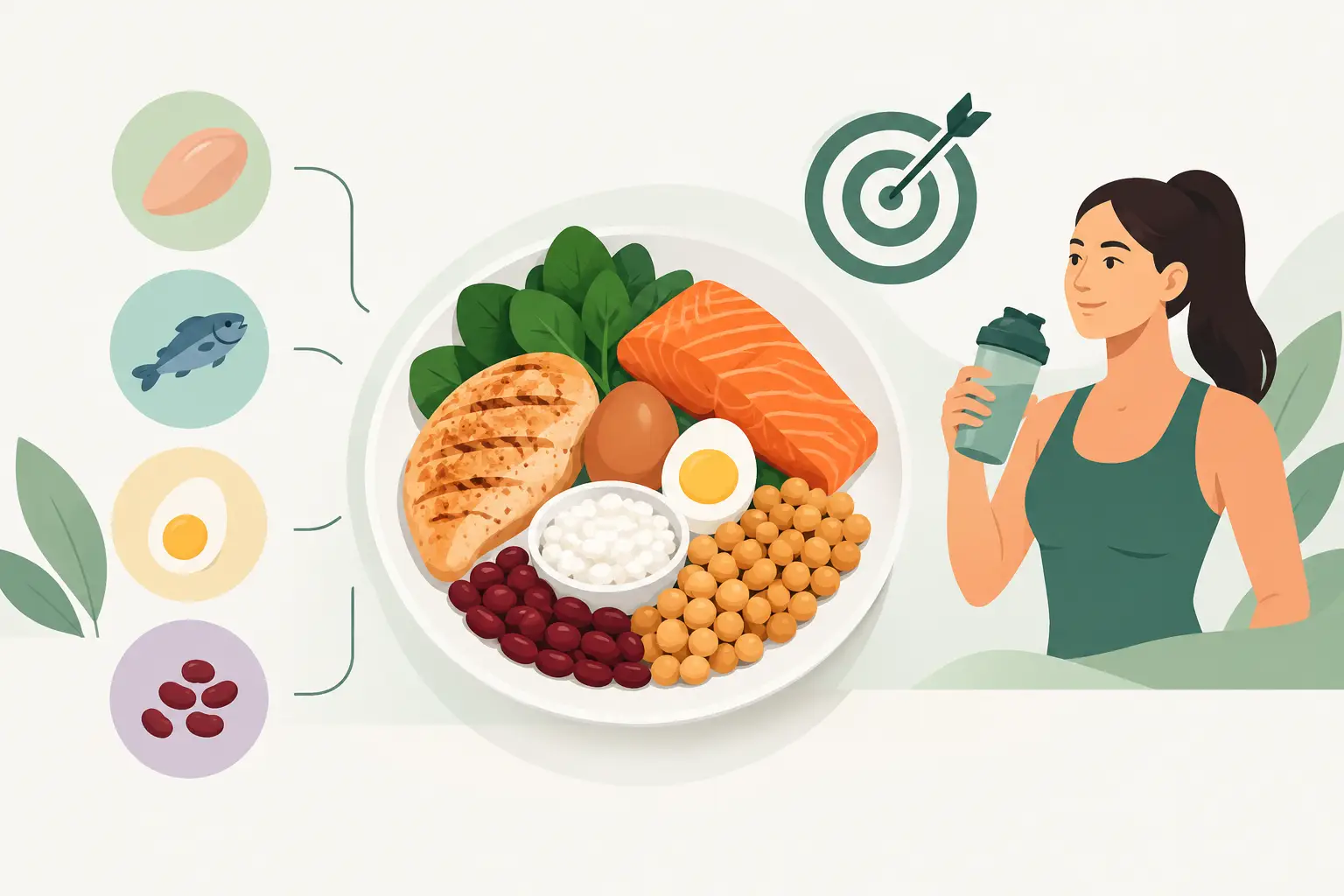
A protein target that is too low can leave hard-earned training progress on the table. One that is unrealistically high can crowd out carbs, fats, fiber, and foods you actually look forward to eating. This protein macro guide helps you find the productive middle ground – enough protein to support your goal, without turning every meal into a math problem.
Protein needs are personal. Your body weight matters, but so do your training volume, total calorie intake, age, food preferences, and goal. A recreational lifter maintaining weight has different needs than a physique athlete dieting down, and both differ from a busy professional trying to stay full and preserve muscle while losing a few pounds.
For most healthy adults who train regularly, a useful daily range is 0.7 to 1.0 grams of protein per pound of body weight. In metric terms, that is about 1.6 to 2.2 grams per kilogram.
If you weigh 165 pounds and train several times a week, that places your starting range at roughly 115 to 165 grams per day. You do not need to hit the exact same number every day. Think of your target as a dependable range that you meet most of the time.
The lower end often works well for general health, lighter training schedules, or people eating enough total calories. The higher end is often more useful when you are lifting hard, dieting for fat loss, already lean, or trying to maximize muscle retention during a calorie deficit.
For muscle gain, start around 0.7 to 0.9 grams per pound of body weight. This supports muscle protein synthesis while leaving sufficient calories for carbohydrates, which can help fuel hard training and recovery. More protein is not automatically better if it means your workout performance drops because carbohydrate intake is too low.
For fat loss, 0.8 to 1.0 grams per pound is a smart starting point for many lifters. Protein can help with fullness, makes meals more satisfying, and supports lean mass while calories are lower. If you carry a significant amount of body fat, using your goal weight or leaner target body weight can make the calculation more realistic than using current body weight.
For maintenance and everyday wellness, 0.6 to 0.8 grams per pound is often enough, especially if you are not doing intense resistance training. Older adults, active adults, and anyone recovering from a demanding training block may benefit from sitting closer to the upper end.
Endurance athletes also need protein, even though carbohydrates remain central to their performance. A range of 0.6 to 0.8 grams per pound usually supports recovery, especially when training includes hills, intervals, or strength work.
Macros are the nutrients that provide calories: protein, carbohydrates, and fat. Protein provides 4 calories per gram, carbs provide 4 calories per gram, and fat provides 9 calories per gram.
Set protein first because it is the macro most closely tied to muscle repair, recovery, and body-composition support. Then establish a sensible minimum for dietary fat. After that, use carbohydrates to fill the remaining calories based on your energy needs and training style.
A simple process looks like this:
Consider a 165-pound lifter eating 2,200 calories for gradual fat loss. At 150 grams of protein, they consume 600 calories from protein. If they choose 70 grams of fat, that adds 630 calories. The remaining 970 calories can come from carbohydrates, which equals about 240 grams.
That may sound like a lot of carbs to someone used to low-carb dieting. But for a person who lifts, walks, and wants to maintain training quality, carbohydrates can be a useful tool. The right split depends on adherence and performance, not on making one macro look impressive in a tracking app.
Your total daily protein intake is the biggest priority. After that, look at quality, digestibility, and how well each option fits your routine.
Complete proteins provide all essential amino acids in adequate amounts. Reliable choices include lean meat, poultry, fish, eggs, Greek yogurt, cottage cheese, milk, soy foods, and protein powder. Whey protein is popular because it is convenient, rich in leucine, and easy to use after training or during a busy workday. Whey isolate can be a good option for people who prefer lower lactose and lower carb content, while a whey concentrate may be a more budget-friendly everyday choice.
Plant-based eating can support strength, health, and physique goals too. Use a variety of protein sources such as tofu, tempeh, edamame, beans, lentils, seitan, and a blended plant protein powder. Plant proteins can be slightly less concentrated in certain essential amino acids, so aiming toward the higher end of your protein range is often practical.
Whole foods bring vitamins, minerals, healthy fats, and fiber to the table. Supplements are there to close a gap, not replace every meal. A shake is especially useful when you are short on time, need an easy post-workout option, or struggle to reach your target through food alone.
You do not have to eat six meals a day to build muscle. Daily protein intake matters most. Still, spreading it over three to five eating occasions can make your target easier to reach and may better support muscle protein synthesis than saving nearly all of it for dinner.
For many people, 25 to 40 grams per meal is a useful benchmark. Larger individuals may need more, while smaller individuals may do well with less. Instead of obsessing over a perfect schedule, build a repeatable pattern: a protein-forward breakfast, a solid lunch, dinner with a meaningful serving of protein, and a shake or high-protein snack when needed.
Post-workout protein is helpful, but the so-called anabolic window is wider than many people think. Having a protein-rich meal within a few hours of training is usually plenty, particularly if you have already eaten protein earlier in the day. If you train fasted or know your next meal will be delayed, a shake after training is a simple, effective choice.
The first mistake is choosing a target that looks impressive but does not fit your appetite, budget, or lifestyle. Consistency beats hitting 200 grams for three days and abandoning your plan by Friday.
The second is treating protein foods as automatically low calorie. Nut butters, full-fat cheese, fatty cuts of meat, protein bars, and restaurant portions can all contribute more calories than expected. They can absolutely fit your plan, but they still count toward it.
Third, do not let protein crowd out produce and fiber. A plate built around protein should still include colorful fruits or vegetables, a carbohydrate source that supports your training, and fats that help make meals satisfying. Digestion, energy, and long-term health matter alongside your macro totals.
Finally, avoid changing your target every time the scale moves. Body weight naturally shifts with hydration, sodium, carbohydrate intake, and digestion. Track your average weight, gym performance, hunger, recovery, and how your clothes fit for two to four weeks before making a meaningful adjustment.
The best protein plan is built around foods you already enjoy. Keep convenient options available for rushed days: Greek yogurt, eggs, canned fish, cooked chicken, tofu, cottage cheese, jerky, or a quality protein powder. If breakfast is where your target falls apart, add a shake, high-protein yogurt, or eggs rather than hoping lunch will make up the difference.
Good Life Nutrition House can help simplify the supplement side with protein options suited to muscle growth, weight management, recovery, and everyday wellness. Choose based on ingredients, digestive comfort, flavor preferences, and the role it needs to play in your routine – not just the biggest number on the label.
Start with a protein range you can sustain this week, build meals around it, and let your training results guide the next adjustment. Progress is usually less about finding a perfect macro split and more about repeating the fundamentals long enough for them to work.